English
 English


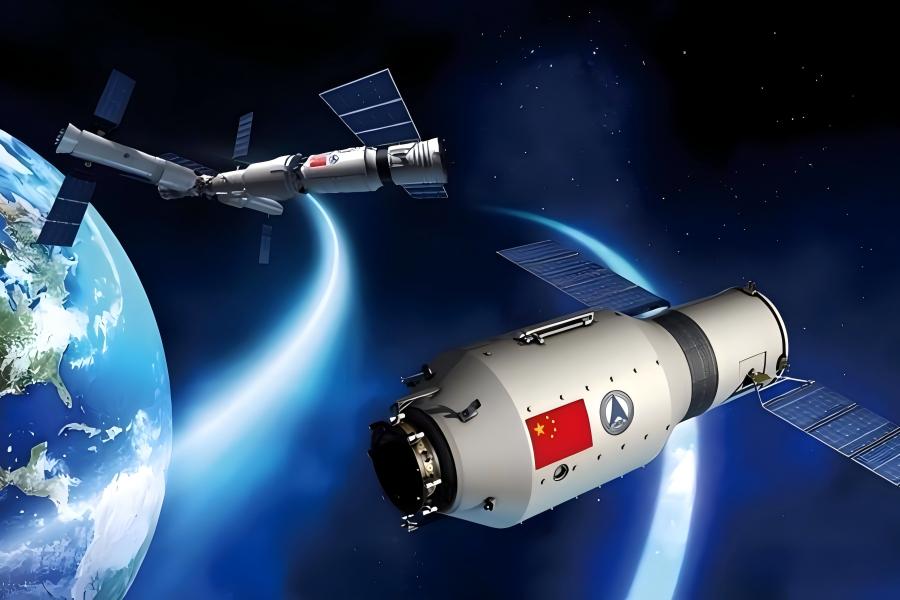
Aerospace equipment operates under extreme service conditions: ultra-high temperature, sharp temperature swings, low-pressure vacuum, high-speed airflow scouring, gas corrosion and particle erosion. Meanwhile, stringent requirements are placed on weight reduction, dimensional stability and long-term reliability. Traditional superalloys degrade rapidly when temperatures exceed 1100°C. Advanced ceramics including alumina, silicon carbide, silicon nitride, boron nitride and ceramic matrix composites (CMC) feature outstanding high-temperature resistance, low density, corrosion resistance, thermal shock resistance and low thermal expansion. They have become critical materials for aero-engines, spacecraft, missiles and airborne precision instruments, enabling aircraft to achieve higher speed, higher thrust-to-weight ratio and longer service life.
1. Hot Section Components of Aero-Engines
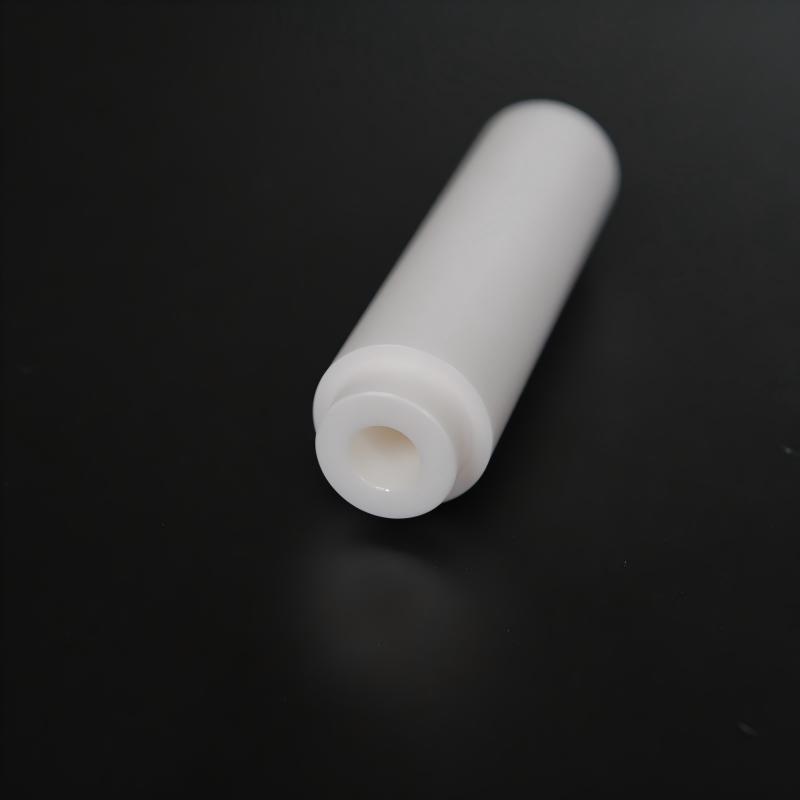
Aero-engine hot-end components represent one of the most important application fields for advanced ceramics. Silicon carbide ceramic matrix composites (SiC/SiC CMC) are adopted for combustor liners, turbine vanes, turbine blades, flame tubes and nozzle flaps. They can sustain long-term service above 1200°C and deliver remarkable weight reduction compared with nickel-based superalloys, greatly improving engine thrust-to-weight ratio and cutting fuel consumption. Silicon nitride ceramics are widely used for fuel nozzles, ignition electrode sheaths and sensor protection sleeves. They resist hot gas corrosion and thermal shock and are less prone to cracking under repeated thermal cycling. High-purity alumina ceramics serve as internal insulators and high-temperature cable sheaths inside engines.
2. Thermal Protection Systems for Flight Vehicles
Hypersonic vehicles, re-entry spacecraft and rocket nozzles are exposed to severe aerodynamic heating. Porous ceramics and CMCs form thermal protection panels, insulation tiles and coating substrates, blocking massive heat transfer to the inner cabin and safeguarding the main airframe. These ceramics feature low thermal conductivity and excellent ablation resistance, retaining structural integrity under short-duration extreme heat. They are foundational materials for re-entry capsules and warhead thermal protection.
3. Airborne Sensing, Navigation and Optical Components
Attitude sensing, navigation and measurement systems in aerospace demand ultra-high precision. Advanced ceramics have an extremely low thermal expansion coefficient and nearly constant dimensions against temperature variation. Zirconia and alumina ceramics are used for gyroscope bases, support structures of inertial navigation platforms and accelerometer mounts, minimizing navigation drift induced by temperature change. Transparent ceramics, ceramic optical reference blocks and laser windows are integrated into space-borne optical payloads and airborne photoelectric detection systems, combining light transmission, heat resistance and radiation tolerance. Ceramic insulating sleeves and terminals are applied for airborne high-voltage circuits and radio-frequency assemblies.
4. Propulsion Systems, Valves and Flow Control Parts
In rocket engines, attitude control thrusters, fuel and hydraulic pipelines, silicon nitride and silicon carbide ceramics are fabricated into valve cores, seats, throttling elements and injector parts. They withstand aggressive corrosion and high-speed erosion from propellants and oxidizers. In hydraulic and fuel servo valves, ceramic friction pairs offer excellent wear resistance and stable dimensions, maintaining sealing accuracy amid drastic temperature fluctuations and preventing dangerous leakage in control loops.
5. Supporting Components for Satellites and Deep Space Exploration
The space environment features vacuum, ultraviolet radiation, atomic oxygen and cosmic rays. Ceramics are radiation-resistant, low-outgassing and chemically stable, making them suitable for on-orbit instruments. Alumina and aluminum nitride ceramic substrates provide thermal dissipation and electrical insulation for satellite-borne power devices and RF chips. Porous ceramics are used for cold gas thruster nozzles and ion thruster grid assemblies. Ceramic spacers and brackets support payload instruments without releasing volatile contaminants that could contaminate optical sensors and delicate electronics.
Industry Benefits and Outlook
Advanced ceramics break through the temperature limit and heavy weight bottleneck of superalloys, serving as enablers for high-thrust aero-engines and hypersonic vehicles. Current challenges include inherent brittleness, non-destructive testing of complex components, batch consistency and manufacturing costs. Ongoing advances in toughened ceramics, bio-inspired composites and additive manufacturing of ceramics will further expand their use in reusable space vehicles and next-generation aerospace propulsion systems.
Conclusion
From aero-engine hot-section parts and spacecraft thermal protection structures, to inertial navigation bases, on-orbit electronics and propulsion components, advanced ceramics combine heat resistance, light weight, corrosion resistance and dimensional stability. They continuously push the temperature and performance boundaries of aerospace hardware and act as strategically essential foundational materials for the evolution of aerospace technology.